Shishir - Season

alternative
INTRODUCTION

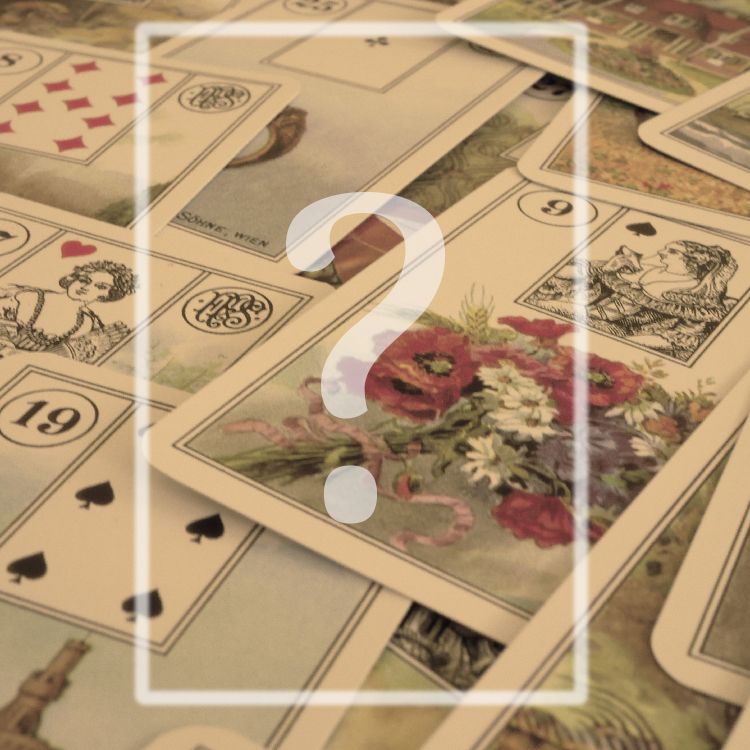
The Petit Lenormand is probably the most fascinating fortune-telling deck inherited from the 19th century. Inspired by the famous Mademoiselle Lenormand, this 36-card deck is known for its amazing ability to predict the future in a concrete and direct way. While other oracles can be vague, the Lenormand gives honest answers to daily life questions (love, work, money).

At first, it is tempting to see the Lenormand as a simpler system than the Tarot. With only 36 cards using clear symbols (a Dog, a Tree, a Key...), it seems easier to learn than the 78 complex cards of the Tarot. However, this simple look hides a clever mechanic.

To master this deck, learning keywords by heart is not enough. The real power of the Petit Lenormand lies in its unique grammar:

  • A language of associations: Unlike the Tarot where one card is sometimes enough on its own, the Lenormand works in pairs or trios. It is the combination of cards that creates the message (ex: Rider + Clover = Good news is coming fast).
  • Strong polarity: The deck has high contrasts with very positive cards (Sun) and very negative ones (Coffin, Cross). The art of the reader is to balance these forces when they meet in the same spread.
  • Symbols with two sides: Even if the images are simple, their meaning can be surprising. The Fox is not just an animal; it is the symbol of "Work" or trickery, depending on the context.

🎁 Too long to read on a screen?

Download the PDF eBook version (80 pages) of this complete guide for free. Included: the 36 classic cards + the 8 bonus cards from the Gilded Reverie + thematic interpretations.

This guide was created to save you time. You will find below the full meaning of the 36 cards. For each card, I first give you the classic and traditional view (to have solid basics), followed by my modern interpretation from my personal practice, to help your readings flow better.

SURVEY

You and guided meditation

I don't even know what it is, Oops! 😅
I've never done one ... 🙄
I've done guided meditations before 😉👍
I'm not interested in doing any 🤔
I would like to find on this site meditations related to the tarot teachings ☝
Summary

This is the season of Tushara (hoarfrost). In the hills, the grass crunches underfoot. In the cities, the sun rises late—a pale, gentle orb that takes until 9 AM to actually warm your bones. The nights are long, and the air carries the sweet, smoky scent of mustard flowers in bloom and wood fires from villages. For the food lover, Shishir is paradise. This is the season when nature’s larder is at its most vibrant. The fields explode with Sarson ka Saag (mustard greens), Bathua (chenopodium), and Spinach . In Punjab and Uttar Pradesh, the sound of "Makki di Roti te Sarson da Saag" (cornflatbread with mustard greens) being prepared is the soundtrack of the season.

So, as you step outside this February morning, feel the dew on your face, eat that extra piece of gajak , and honor the silent, golden twilight of winter. Embrace the season. Stay warm, eat well, and let the fog slow you down—just a little.

What does that mean for you? You might feel heavy, sluggish, congested, or prone to colds and allergies. The morning dew and moisture in the air can clog the body's channels.

According to the Hindu calendar, Shishir spans the months of Magha and Phalguna (mid-January to mid-March). In the Western calendar, this roughly corresponds to late January through February. While the rest of the world calls it "late winter," India’s ancient seers saw it as something far more nuanced—a season of mystical fogs, dewy mornings, sweet harvests, and the first, subtle whisper of approaching warmth. If you wake up in Shishir, you don’t just see the morning; you feel it. The defining character of this season is the Mahika (dew). Unlike the piercing, dry chill of December, Shishir brings a soft, wet cold. A thick, white blanket of fog often rolls across the northern plains, muting sounds and softening edges until the world looks like an impressionist painting.

In a world obsessed with growth and productivity, Shishir Ritu is a reminder that dormancy is not death. It is preparation. The sap is rising quietly beneath the frost-bitten ground. The sun is gaining strength every single day.

Here’s an interesting article about the (the winter season in the Hindu calendar), focusing on its unique blend of climate, agriculture, health, and culture. Shishir Ritu: The Silent, Golden Twilight of Winter In the grand cyclical dance of the Indian seasons, most people celebrate the boom of monsoon ( Varsha ) or the bloom of spring ( Vasant ). But nestled between the biting cold of Hemanta (early winter) and the explosive color of Vasant lies a quiet, often overlooked gem: Shishir Ritu .

CONCLUSION

The simplicity of the Lenormand cards can be deceptive. Following the classical interpretation of the cards, I think that beginners should still do some real learning of the Lenormand system to produce solid and consistent readings.

I hope that with the personal elements I propose for each of the cards, this progression will be facilitated. Feel free to comment and share your own vision of the cards.

Don't leave empty-handed!

Which Lenormand decks to use?

  • The traditional : You can of course use a Lenormand deck, like the Piatnik which I review in this article: Piatnik Lenormand Review
  • The popular : Of course the Ciro Marchetti's Gilded Lenormand is a popular deck, and I review it in this article: Gilded Lenormand Review
  • The outsider : I have an independent game based on the world of piracy which is a very convincing alternative to the standard system, and I review it in this article:'Clear The Deck' Lenormand Review

Learning the Petit Lenormand :

✨ Share your vision of the Lenormand ✨

Each card in the (Petit) Lenormand is a universe of symbols and meanings that intertwine with our own stories. Your personal interpretation enriches the fabric of our collective understanding. Which card resonates the most with you? Do you have a story or a personal interpretation that could shed new light on the mysteries of the (Petit) Lenormand?

I invite you to share your discoveries and stories in the comments below. Your contribution is valuable and can become a beacon for someone else on their path of discovery.

👉 Leave a comment now and let's weave together the Grand Tableau of the (Petit) Lenormand.

To go further, continue your reading with ...

Shishir - Season

This is the season of Tushara (hoarfrost). In the hills, the grass crunches underfoot. In the cities, the sun rises late—a pale, gentle orb that takes until 9 AM to actually warm your bones. The nights are long, and the air carries the sweet, smoky scent of mustard flowers in bloom and wood fires from villages. For the food lover, Shishir is paradise. This is the season when nature’s larder is at its most vibrant. The fields explode with Sarson ka Saag (mustard greens), Bathua (chenopodium), and Spinach . In Punjab and Uttar Pradesh, the sound of "Makki di Roti te Sarson da Saag" (cornflatbread with mustard greens) being prepared is the soundtrack of the season.

So, as you step outside this February morning, feel the dew on your face, eat that extra piece of gajak , and honor the silent, golden twilight of winter. Embrace the season. Stay warm, eat well, and let the fog slow you down—just a little. shishir season

What does that mean for you? You might feel heavy, sluggish, congested, or prone to colds and allergies. The morning dew and moisture in the air can clog the body's channels. This is the season of Tushara (hoarfrost)

According to the Hindu calendar, Shishir spans the months of Magha and Phalguna (mid-January to mid-March). In the Western calendar, this roughly corresponds to late January through February. While the rest of the world calls it "late winter," India’s ancient seers saw it as something far more nuanced—a season of mystical fogs, dewy mornings, sweet harvests, and the first, subtle whisper of approaching warmth. If you wake up in Shishir, you don’t just see the morning; you feel it. The defining character of this season is the Mahika (dew). Unlike the piercing, dry chill of December, Shishir brings a soft, wet cold. A thick, white blanket of fog often rolls across the northern plains, muting sounds and softening edges until the world looks like an impressionist painting. The nights are long, and the air carries

In a world obsessed with growth and productivity, Shishir Ritu is a reminder that dormancy is not death. It is preparation. The sap is rising quietly beneath the frost-bitten ground. The sun is gaining strength every single day.

Here’s an interesting article about the (the winter season in the Hindu calendar), focusing on its unique blend of climate, agriculture, health, and culture. Shishir Ritu: The Silent, Golden Twilight of Winter In the grand cyclical dance of the Indian seasons, most people celebrate the boom of monsoon ( Varsha ) or the bloom of spring ( Vasant ). But nestled between the biting cold of Hemanta (early winter) and the explosive color of Vasant lies a quiet, often overlooked gem: Shishir Ritu .

Subscribe to the newsletter :