Department of State

New Jersey State Council on the Arts

Dr. Dale G. Caldwell, Lt. Governor and Secretary of State

On the Next State of the Arts

State of the Arts has been taking you on location with the most creative people in New Jersey and beyond since 1981. The New York and Mid-Atlantic Emmy Award-winning series features documentary shorts about an extraordinary range of artists and visits New Jersey’s best performance spaces. State of the Arts is on the frontlines of the creative and cultural worlds of New Jersey.

State of the Arts is a cornerstone program of NJ PBS, with episodes co-produced by the New Jersey State Council on the Arts and Stockton University, in cooperation with PCK Media. The series also airs on WNET and ALL ARTS.

On this week's episode... New Jersey Heritage Fellowships are an honor given to artists who are keeping their cultural traditions alive and thriving. On this special episode of State of the Arts, we meet three winners, each using music and dance from around the world to bring their heritage to New Jersey: Deborah Mitchell, founder of the New Jersey Tap Dance Ensemble; Pepe Santana, an Andean musician and instrument maker; and Rachna Sarang, a master and choreographer of Kathak, a classical Indian dance form.

A woman painting on paper taped to the inside of a garage door

Join the Teaching Artist Community of Practice!

The New Jersey State Council on the Arts is hosting quarterly Teaching Artist Community of Practice meetings. These virtual sessions serve as a platform for teaching artists to share their experiences, discuss new opportunities, and connect with each other and the State Arts Council.

Register for the next meeting.

Korean dancers in traditional costume

New Jersey State Council on the Arts Grants $2 Million to New Jersey Artists through Individual Artist Fellowship Program

The State Arts Council awarded $2 million to 198 New Jersey artists through the Council’s Individual Artist Fellowship program in the categories of Film/Video, Digital/Electronic, Interdisciplinary, Painting, Printmaking/Drawing/Book Arts, and Prose. The Council also welcomed two new Board Members, Vedra Chandler and Robin Gurin.

Read the full press release.

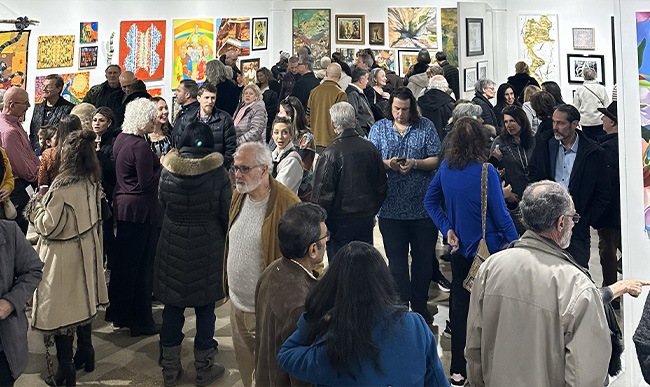
A large crowd in an art gallery during an opening reception.

Join Us for Access Thursday Roundtables

These monthly events, presented by the New Jersey State Council on the Arts and the New Jersey Theatre Alliance, are peer-to-peer learning opportunities covering a wide range of arts accessibility topics.

View the full schedule.

Eplan Prices Exclusive đź’Ż

At first glance, EPLAN’s pricing model seems to provoke a universal reaction: “Why does it cost as much as a luxury car?” A single license of EPLAN Electric P8 can easily exceed €5,000–€10,000, with the full Platform (including Pro Panel, Fluid, and Engineering Center) reaching €15,000–€30,000 per user. Add annual maintenance fees (typically 15–20% of the license cost), and you’re financing a small engineering team’s salary every few years.

So EPLAN prices aren’t just numbers — they’re . If you hesitate, maybe you’re not ready. If you sigh and open the PO, you’ve already committed to the ecosystem for a decade. Final Interesting Observation There’s a dark joke in the industry: “How much does EPLAN cost? Everything. How much does bad documentation cost? Even more.” eplan prices

EPLAN’s pricing succeeds because the pain of messy, inconsistent, error-ridden electrical design is far greater than the pain of the invoice. In a world where a single misrouted cable in a wind turbine can cost $50,000 in service calls, a $10,000 software license is suddenly... reasonable. Strange, but reasonable. Would you like a price comparison table with current (2025–2026) estimates for EPLAN vs. competitors? Or tips for negotiating with EPLAN resellers? At first glance, EPLAN’s pricing model seems to

But here’s where it gets interesting: The “Velvet Handcuffs” Strategy EPLAN’s pricing isn’t based on features alone. It’s based on standardization, data consistency, and automation . Competitors like AutoCAD Electrical or SEE Electrical lure you with lower upfront costs (sometimes 50–70% less). However, EPLAN’s secret weapon is its database-driven architecture and macro ecosystem. Once a company builds its parts library, macros, and navigation strategies, switching costs become astronomical — not just in money, but in months of downtime. If you hesitate, maybe you’re not ready



Back
to top